
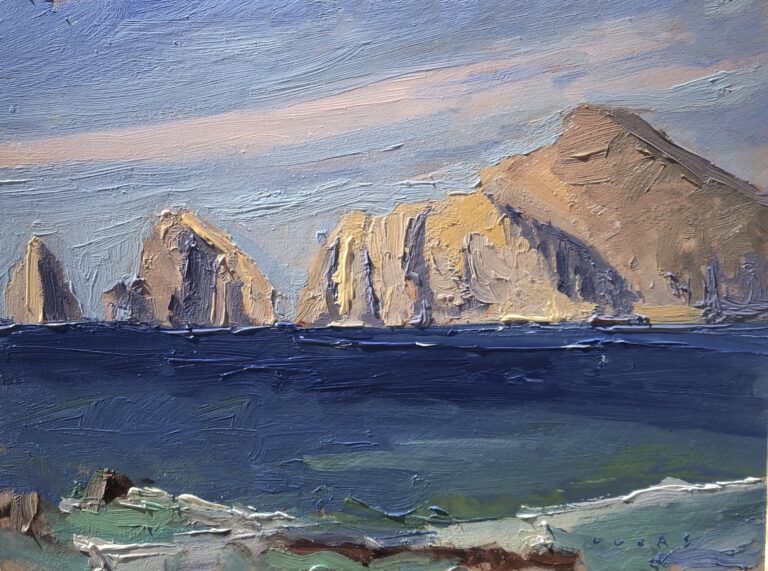
How I paint
One sitting. Outside.
No black.
Camino Cabo Este, February 2019, the last hour of light. The drone circled the easel while I painted. Drag to walk around it.
The palette
Eight tubes,
a warm and a cool of each.
There’s no black on my palette. Every colour in a painting comes from these eight tubes and the white I make. The darks are ultramarine and alizarin, and they stay alive in a way black never does. Pick any colour in the painting and I’ll tell you how I’d mix it.
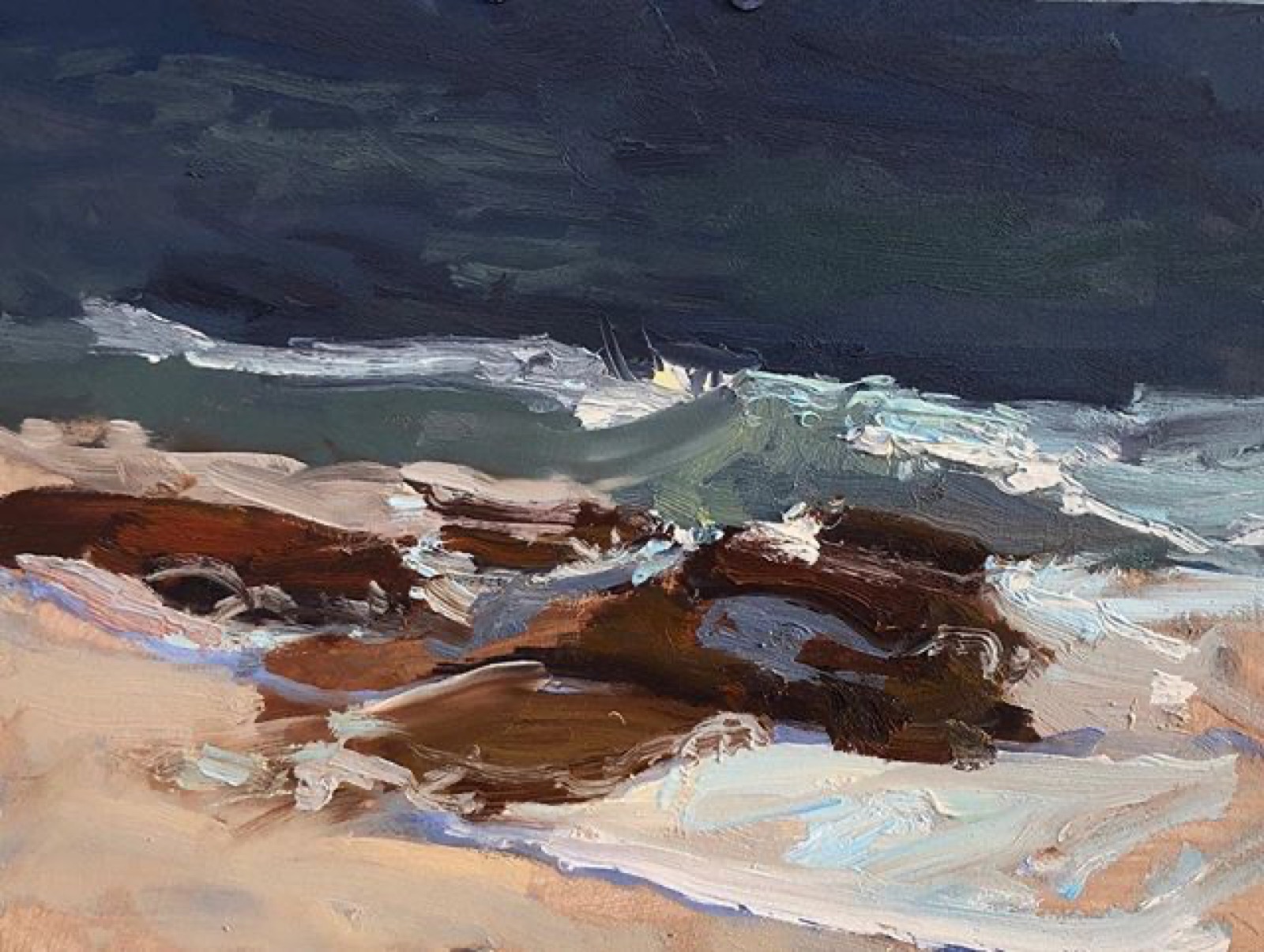 Press any colour
My mix, roughly
8 parts ultramarine, 2 parts cadmium yellow medium and 1 part flake white.
Flake white
I make
my own white.
A couple of years in I stopped using titanium white and started making flake white by the stack process. Less chalky, far more saturated. It has less tinting strength, so I use more of it and less coloured pigment, and I paint much thicker now.
Mill
Ropey
Groove
The sitting, start to finish
Nine steps.
One sitting.
How a painting comes together outside, from finding the spot to the varnish. The photos are from different days and places; the time-lapse is Shoreline Rocks near San José del Cabo, one afternoon in February 2019. Scroll down the steps and the picture follows.


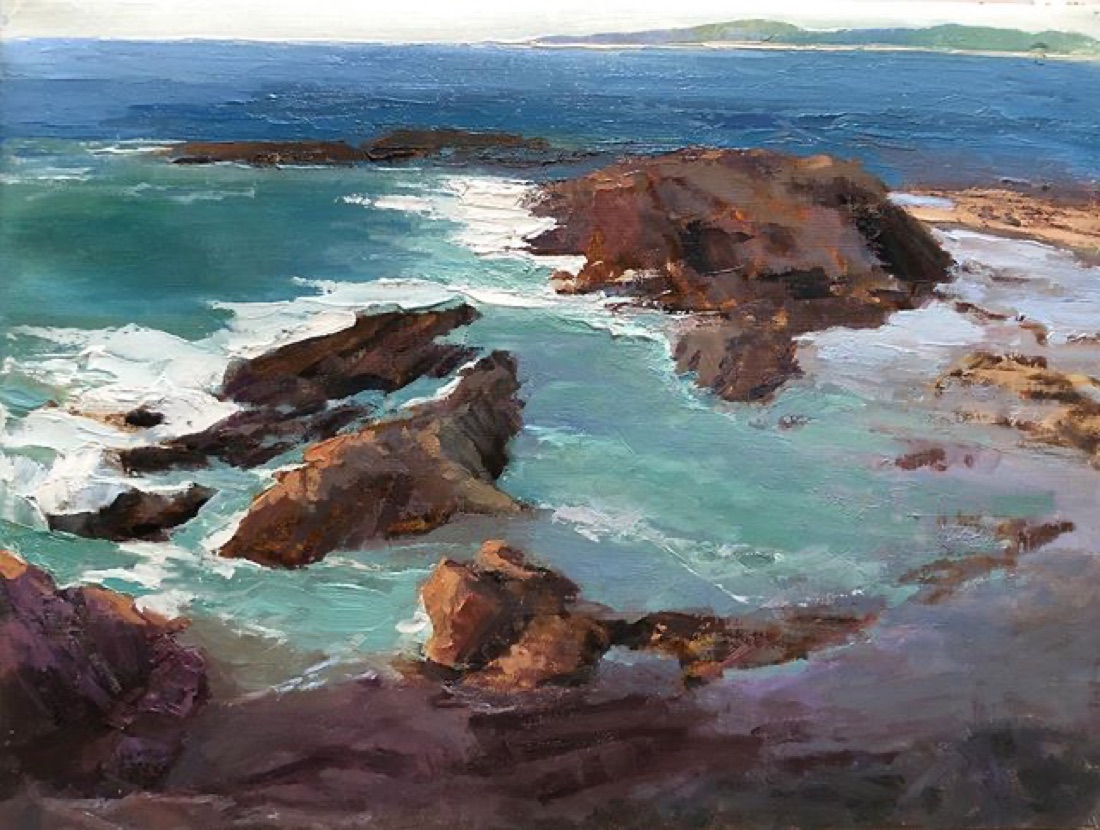

- 01
Sometimes, turn away from the postcard view
The best painting often isn’t the scenic one. Sometimes I turn around and get caught by the colour in the cast shadow of a tree, and that becomes the focal point.
- 02
Frame it
A viewfinder the same proportions as the panel, and about fifteen quick photos. Then I sit in the shade and look at them. The best compositions have strong value shifts and interesting shapes, and they’re rarely the obvious ones.
- 03
Thumbnails: values and composition
This is where I explore. A few small value sketches: where the light, mid and dark go, what gets edited out, what gets pushed back. It’s quick to move things around here, or to find out a composition isn’t working before I’ve mixed any paint. Shadows and shapes are usually more interesting than the view. My stronger pieces start here.
- 04
A burnt umber drawing on an orange ground
The panel is toned orange. I draw the main shapes with a thin glaze of burnt umber, loose, no detail. If something isn’t working I wipe it off with a rag and move it; nothing is fixed yet.
- 05
Build the values, darks first
Before the real colour, I build the values: the darks go in first, then the few colour notes that matter most, the ones that will carry the painting. Get these right and the rest follows.
- 06
Darkest darks, then lightest lights
Thin, top-down and inside out, jumping around the whole panel instead of finishing one corner. The feeling before the exact colour.
- 07
Thicken, and stop
Impasto as I refine, with economy of stroke on the last layers: every mark on purpose, nothing overworked. I save the highlights for the very end, sometimes laid on with the palette knife. I’m interpreting the place, not re-creating it. Once it’s done outside, it’s done.
- 08
Varnish
Gamvar, to protect it for good. It goes on either before the paint has fully dried, or after a wait of several weeks.
- 09
Sometimes, go bigger in the studio
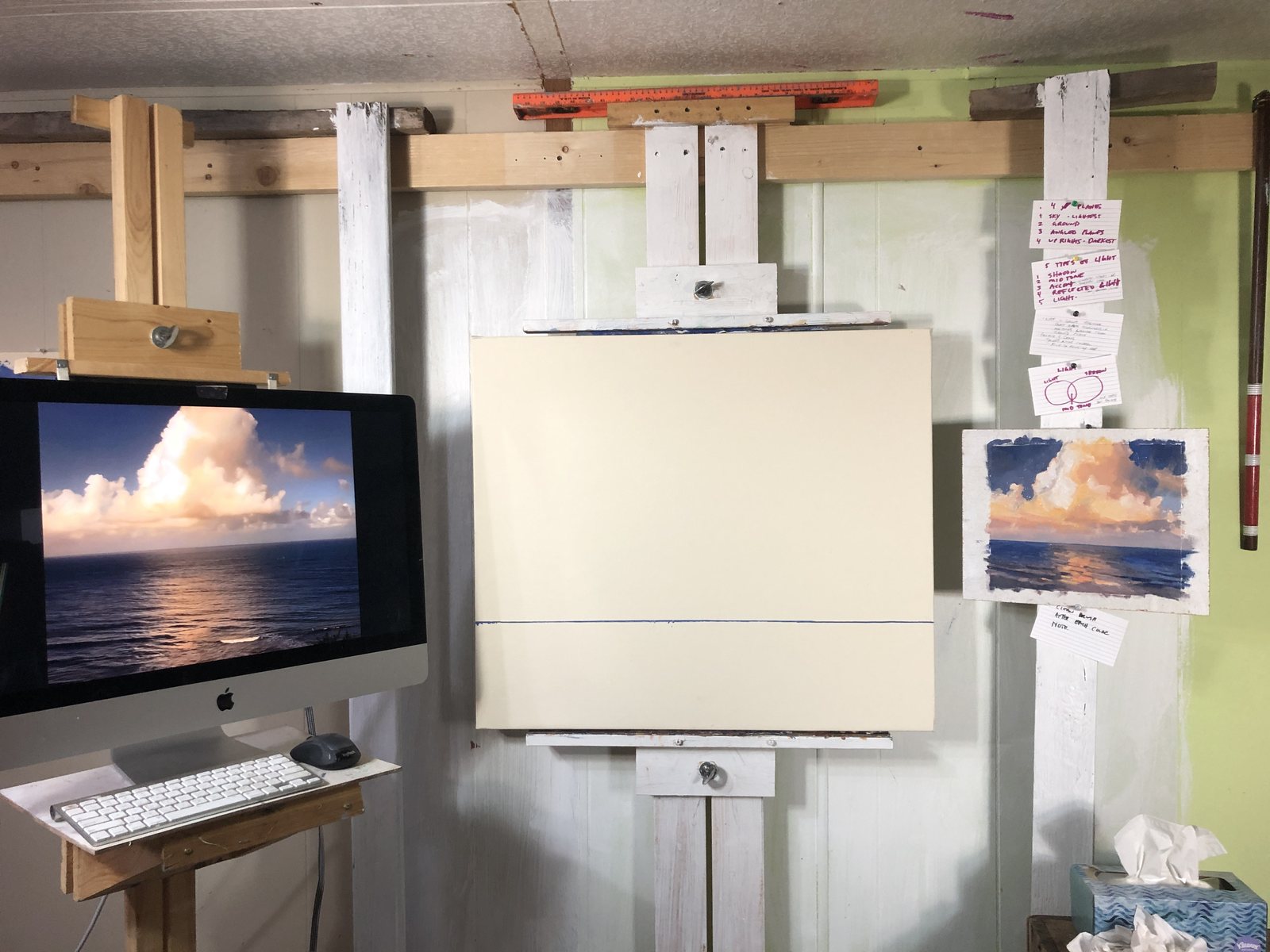
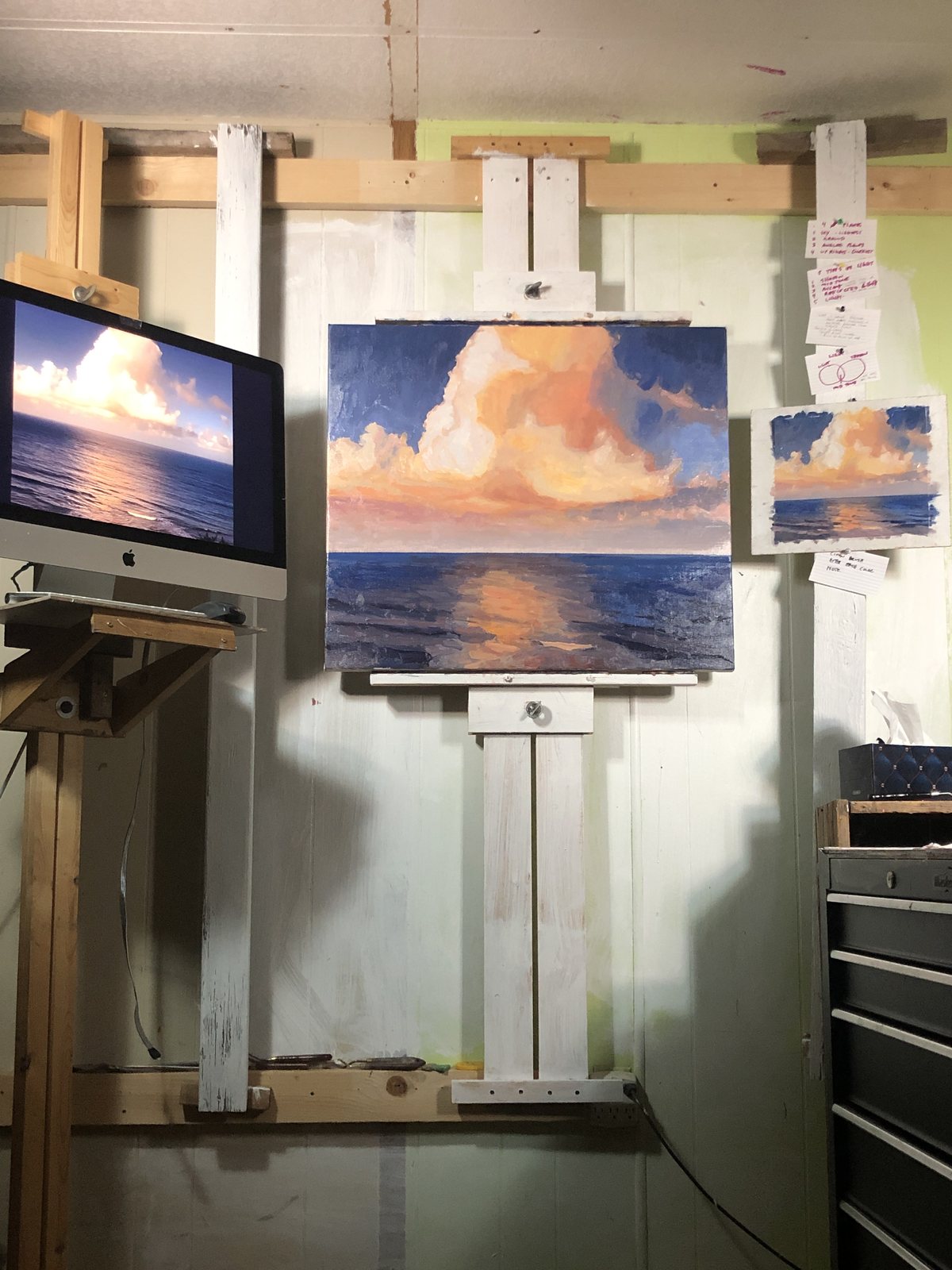
I do work in the studio at times, for larger pieces where I can go into more detail, with the sketch from outside as my starting point. The trick is using bigger brushes to keep the freshness of the sketch, and not overworking it. That’s the secret sauce. How that works
The kit
Three easels I built,
and what’s in the bag.
Every easel I’ve painted on outside, I built.
The little red one
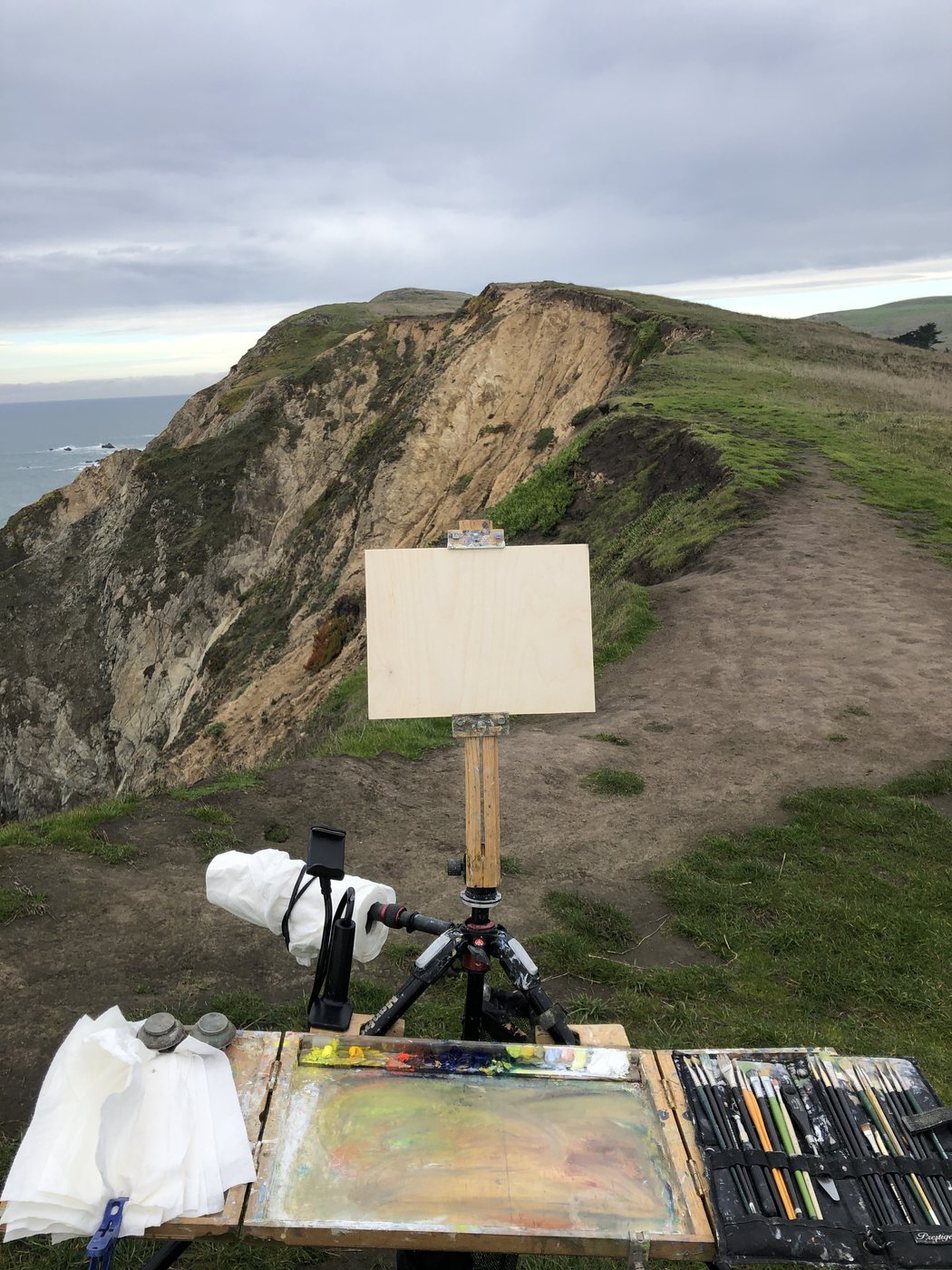
My first pochade box, built from a cigar box. The top slides up so it can hold a bigger panel, and my bag hangs under the tripod to weigh it down in the wind. I tried an umbrella for shade. It didn’t last long. The brush holder on its side I built too.
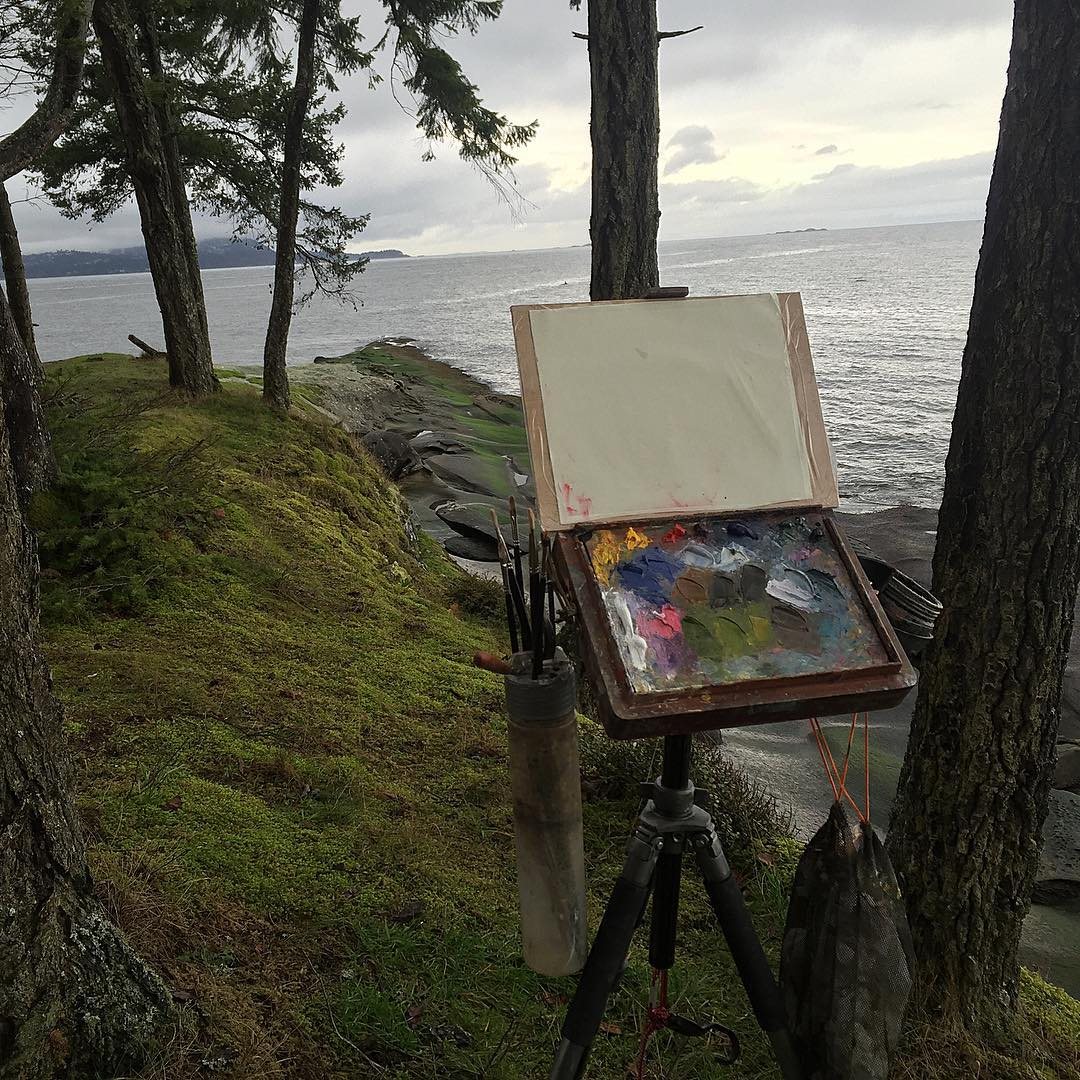
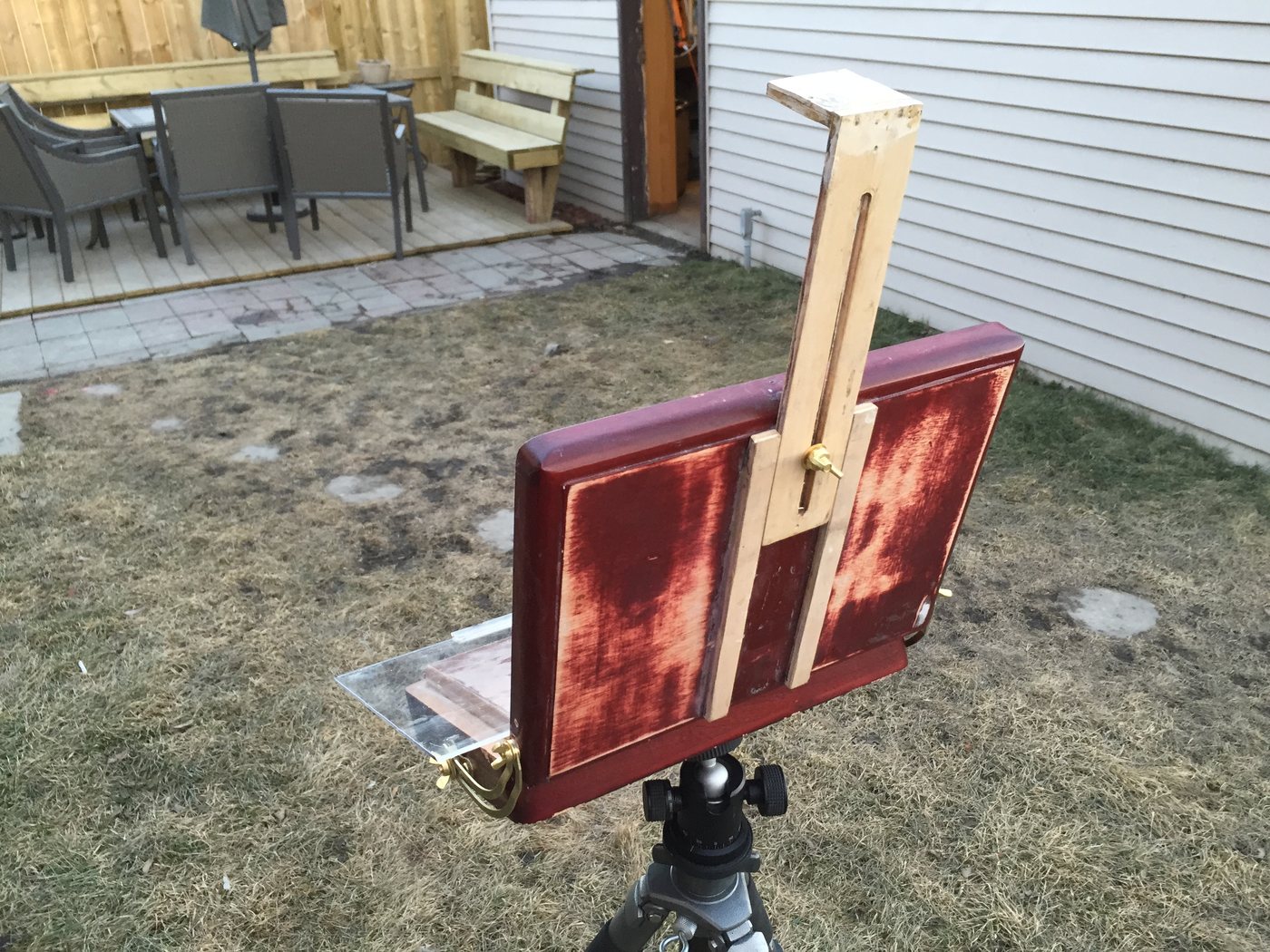
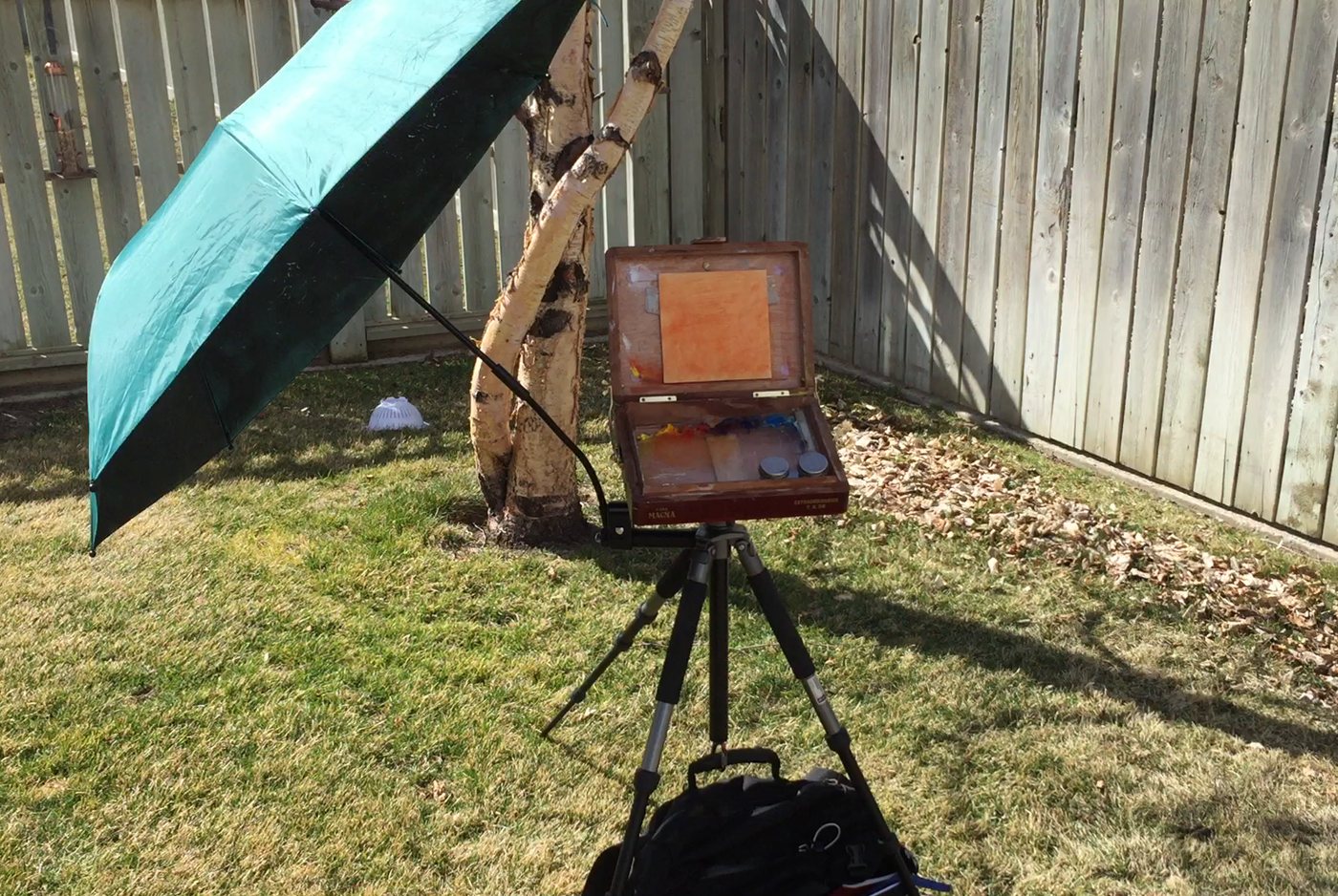
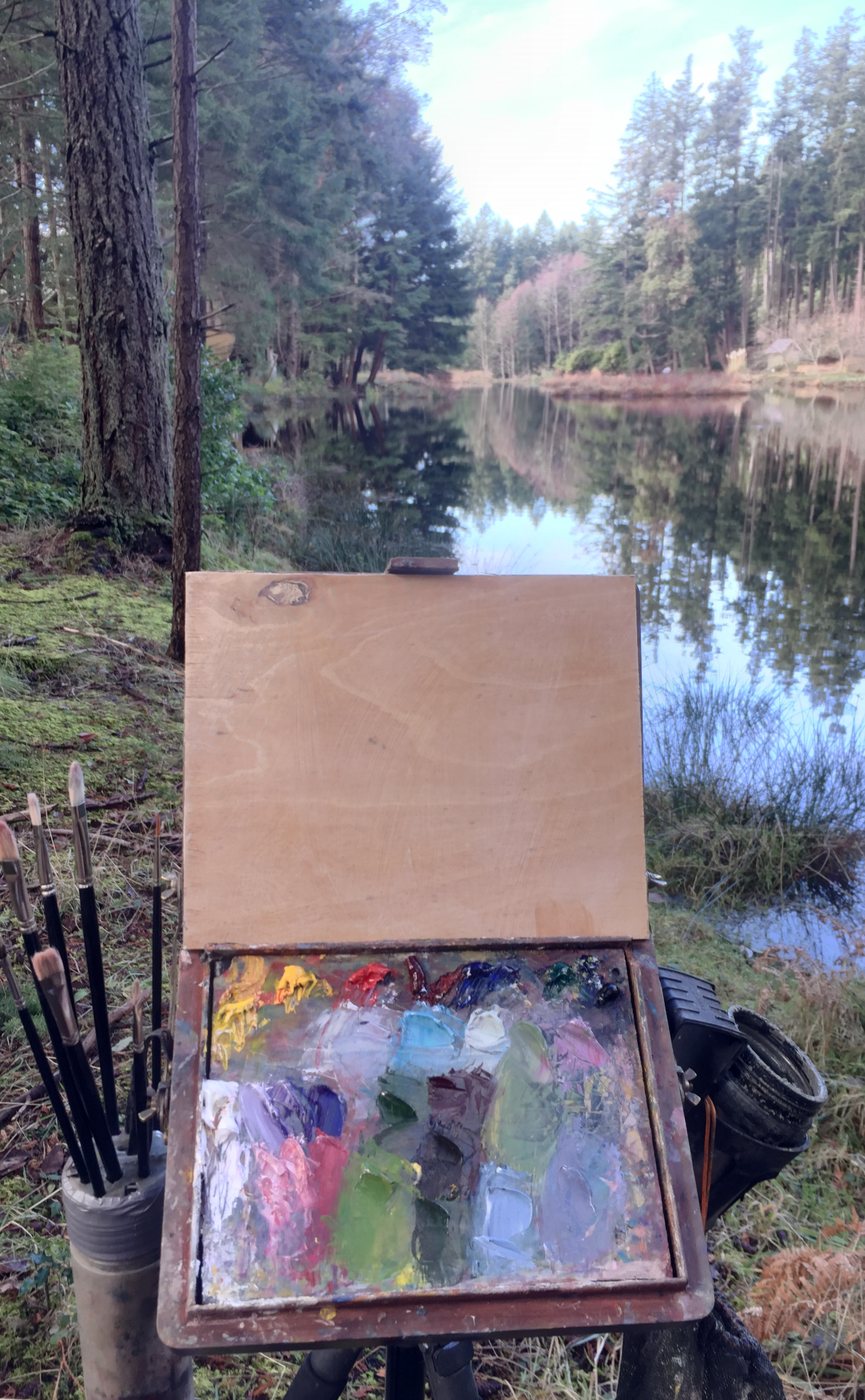
The pochade box
Bigger, with mineral spirits in a sealed container. The lid has a 12 × 9 slot that takes four wet panels, so they can dry and be carried home without touching. When it rained, a makeshift cover went over the top.
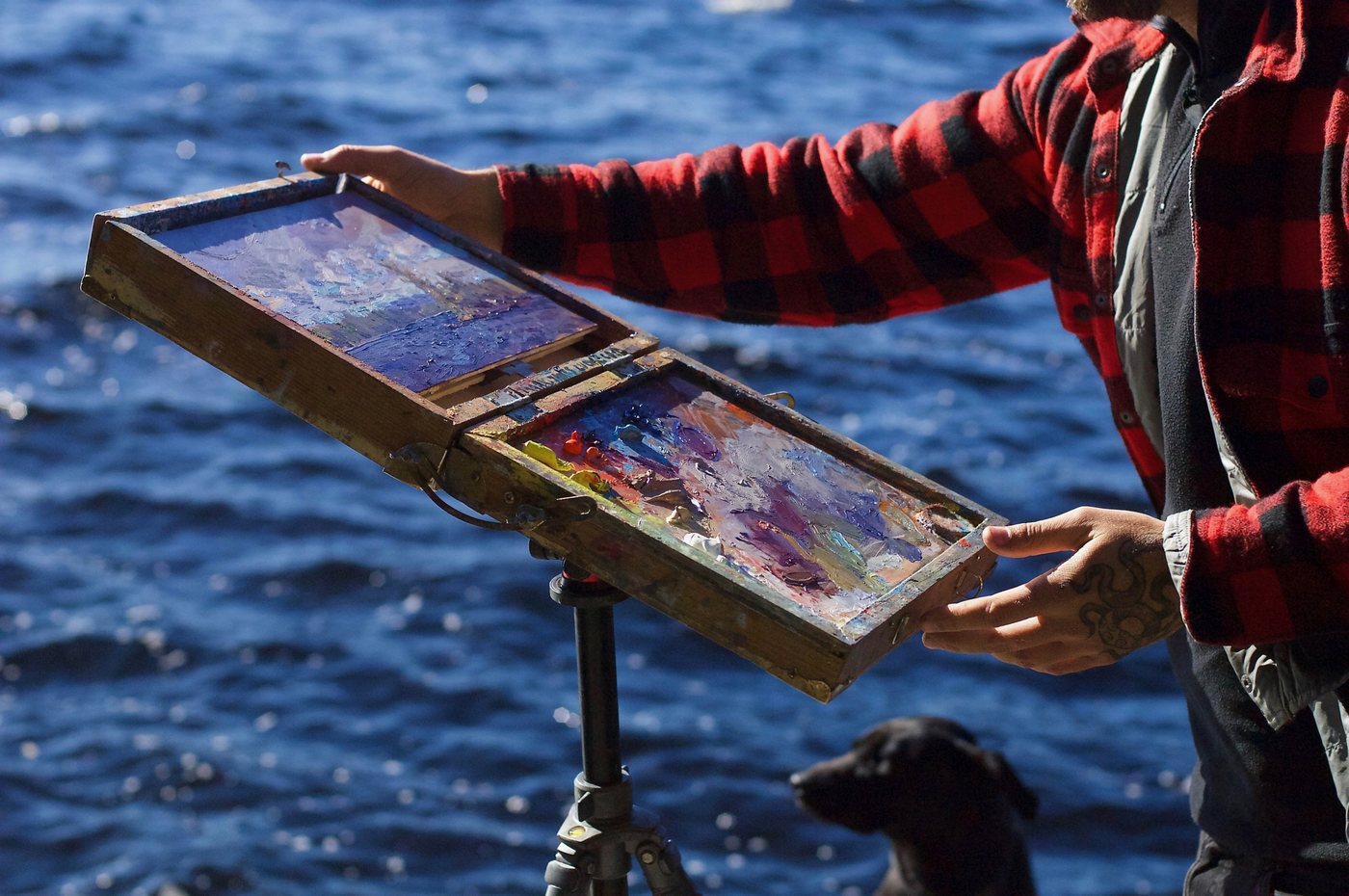
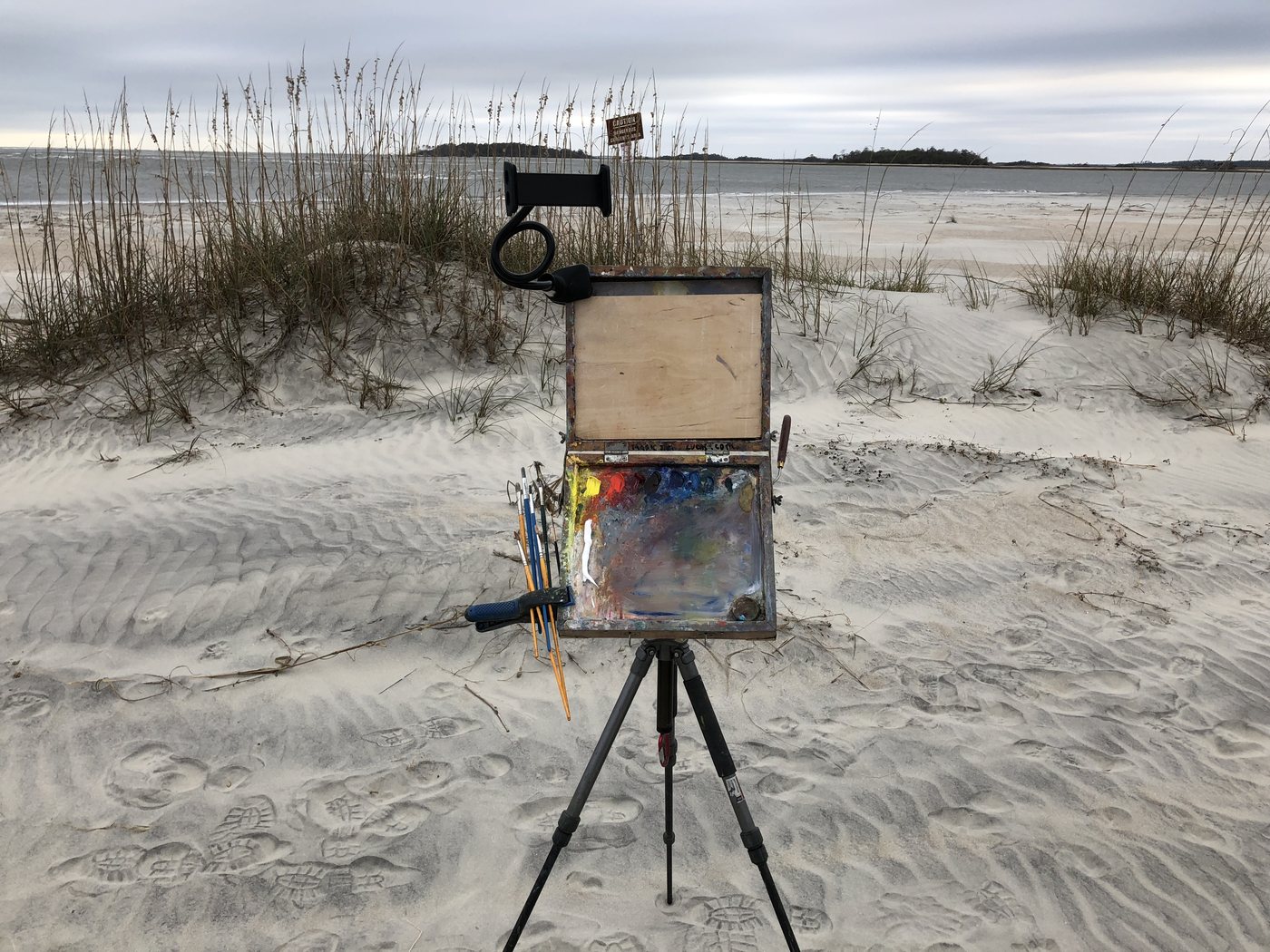
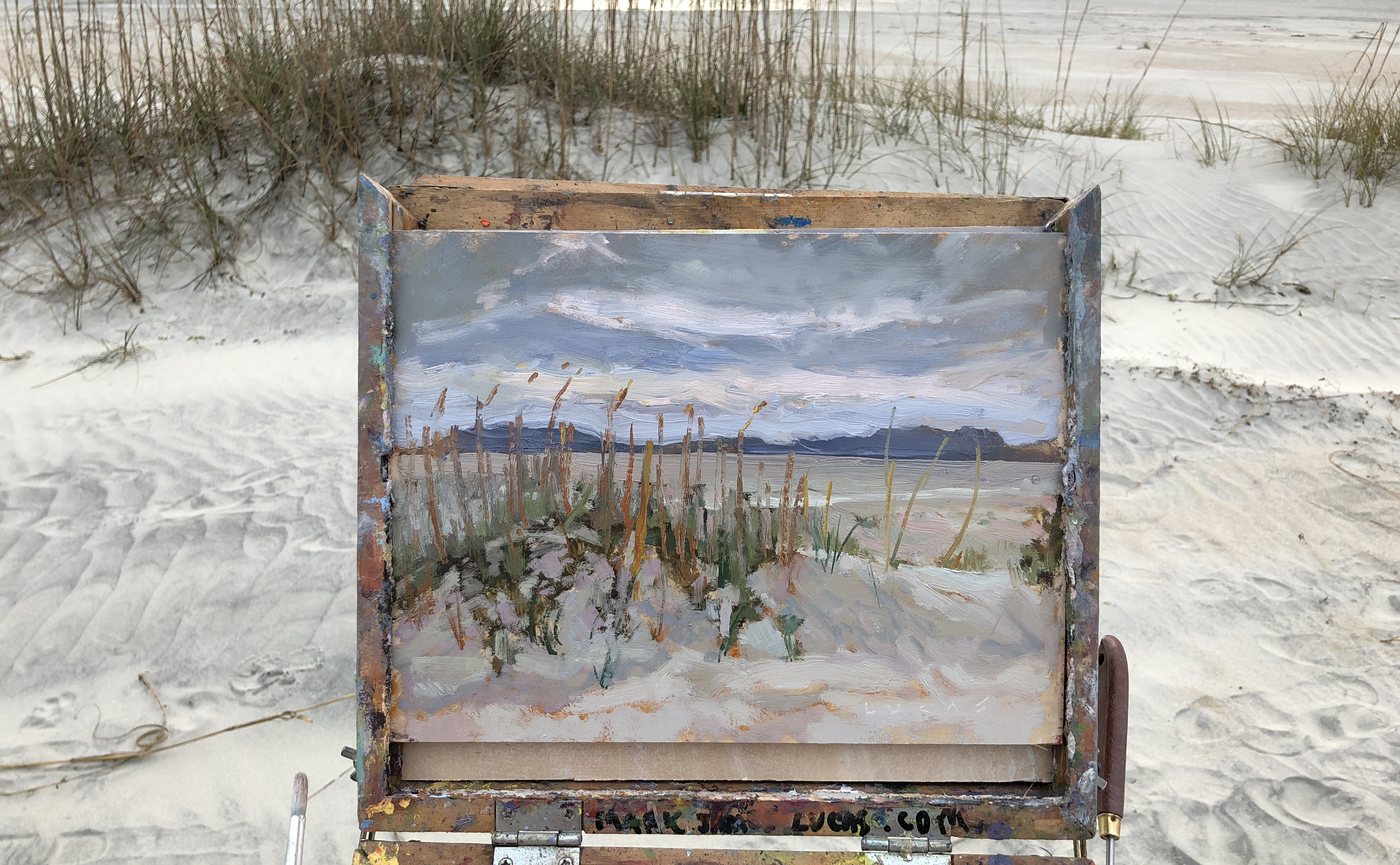
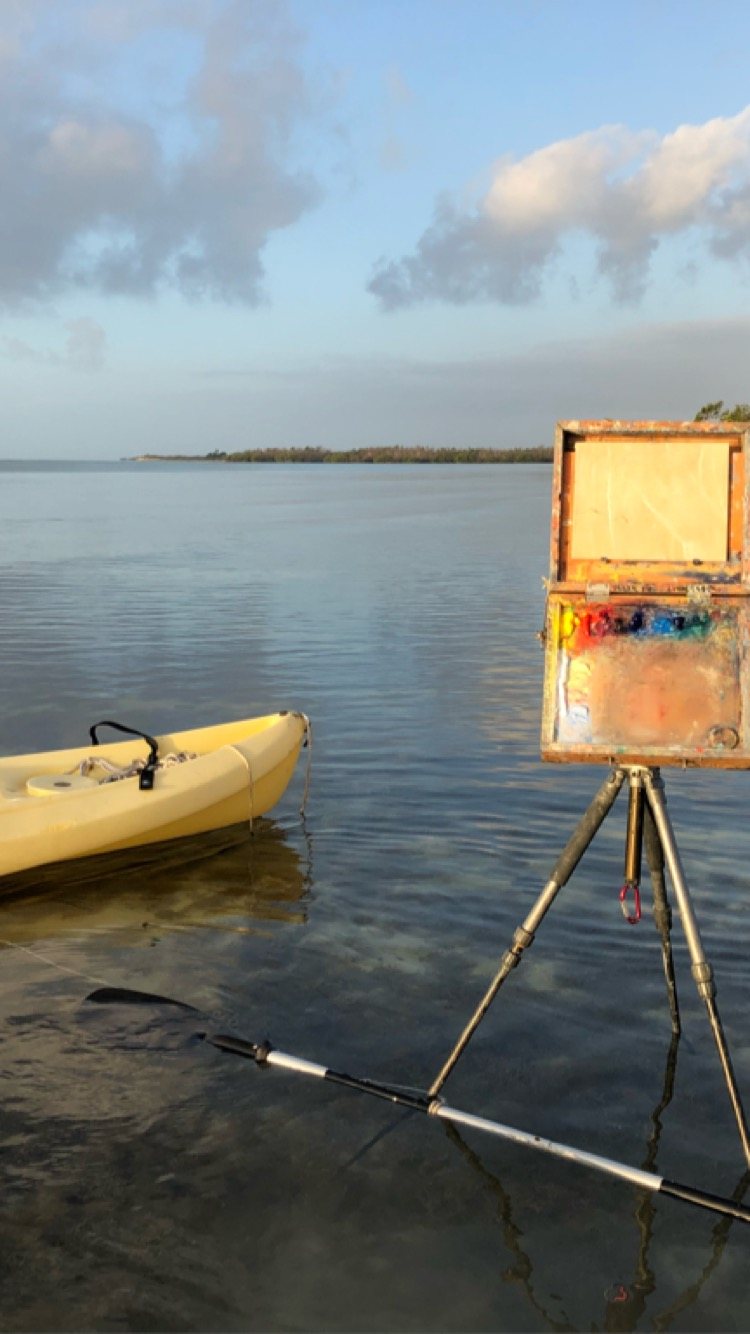
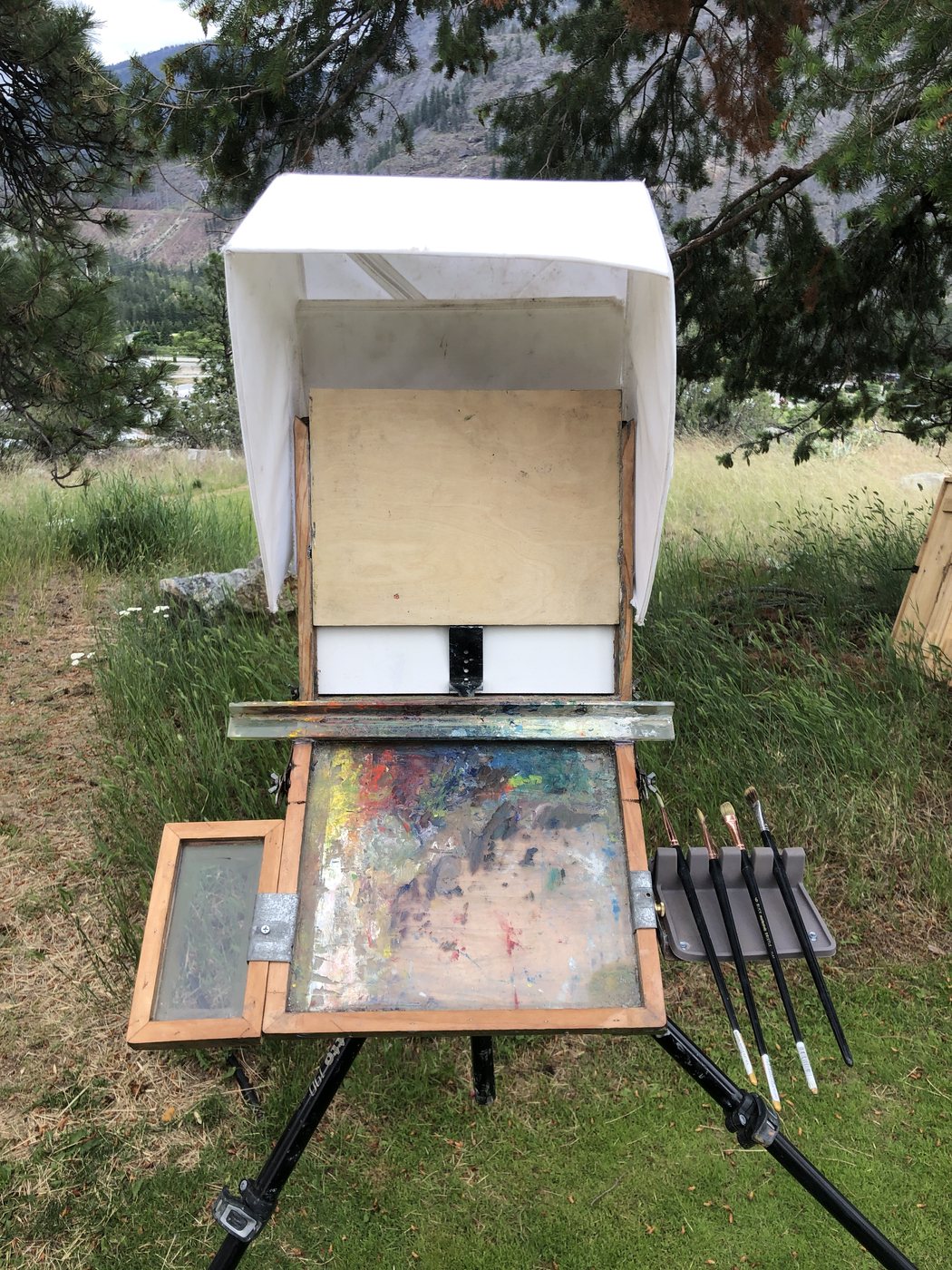
The fold-out
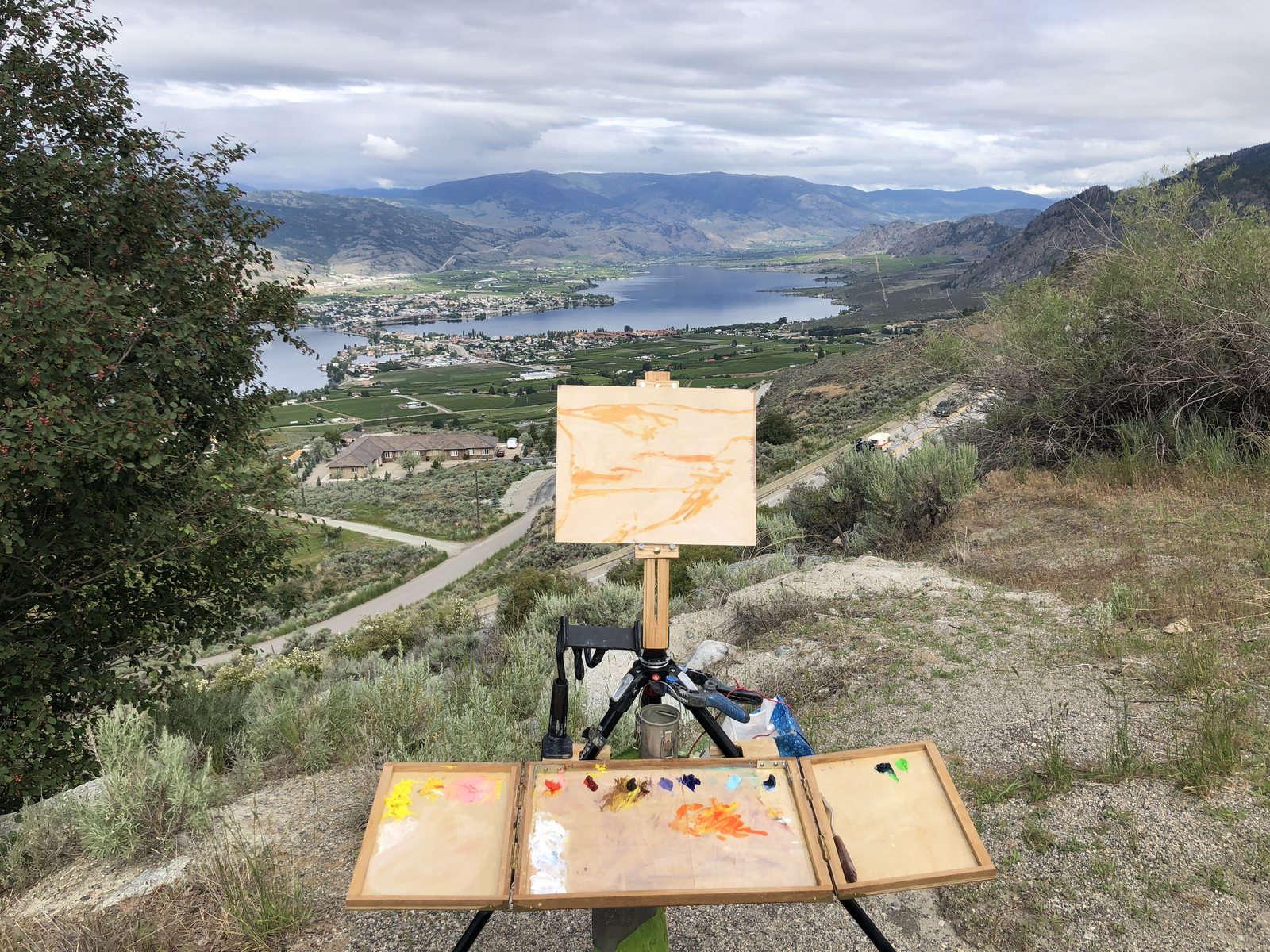
The panel sits up on its own mast and the palette unfolds into wings on each side, with room to mix.
At night
Painting in the dark
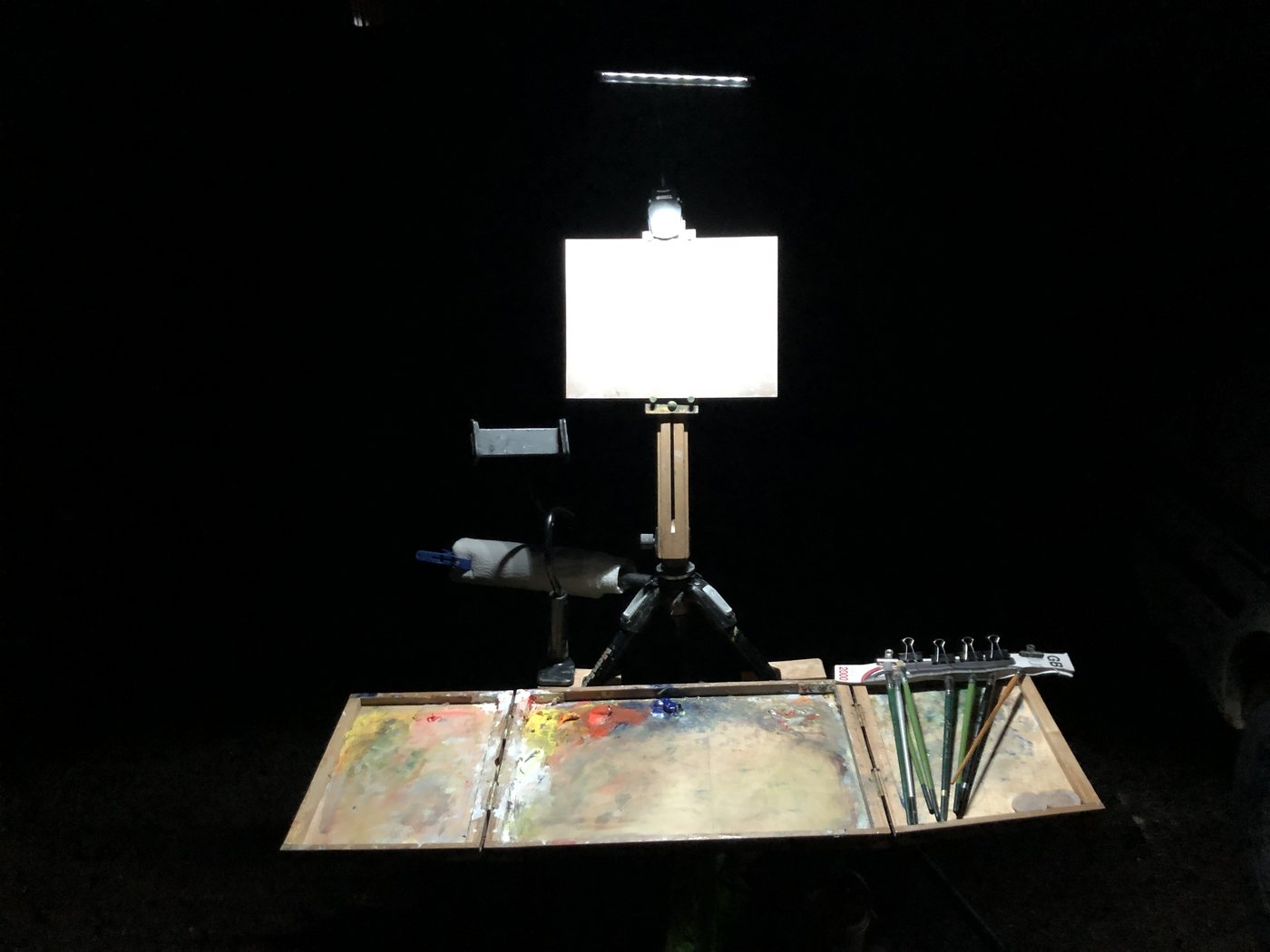
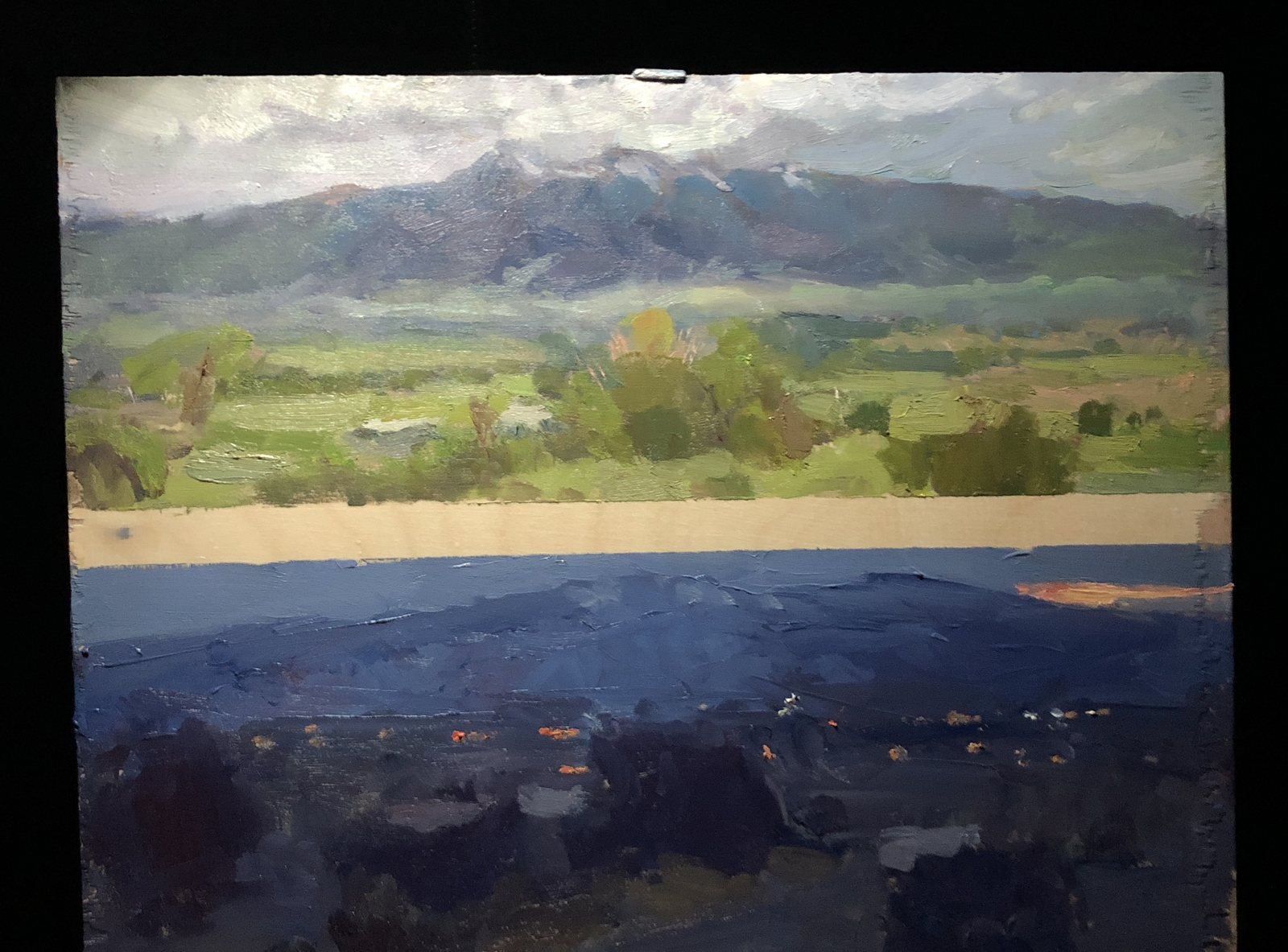
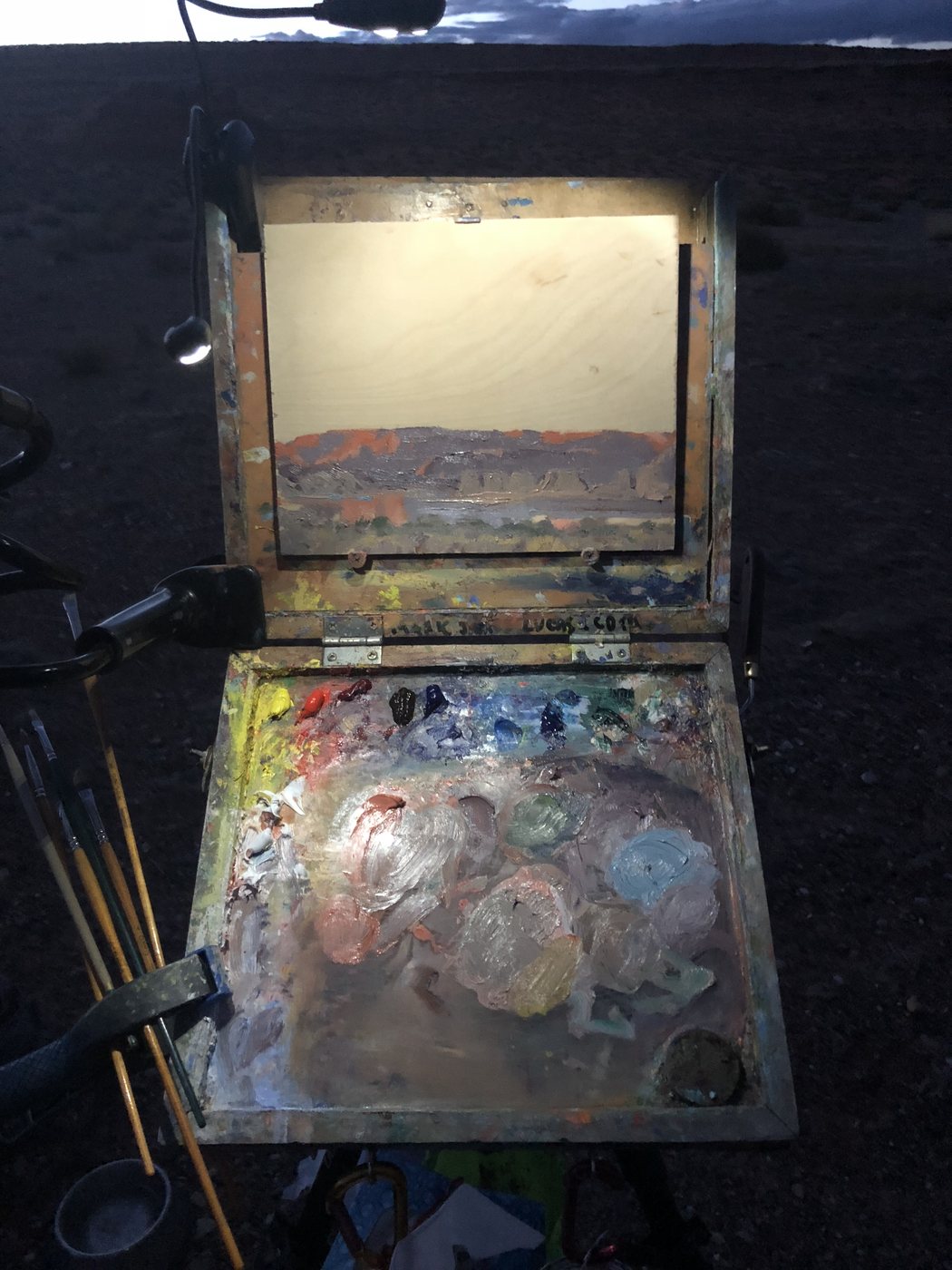
For nocturnes I set up an LED light over the panel and the palette. The studies are quick: dusk into dark, mostly values, not a lot of detail. But you can really catch the right notes, and how the values compare, this way.
After a workshop with Josh Clare in Utah I camped near a hilltop and set up there from dusk until the light was gone.
In the bag
At home
From sketch to a larger piece
The studio easel I made. The sketch from outside is pinned beside the big panel and the reference is on the screen.
Dead Tree at Boca Chica
A 14 × 11 study on the beach in Key West, January 2018, and the 36 × 24 I painted from it in April.

